
About
Submit a Service RequestThe Virology Unit anchors quantitative and mechanistic studies of viral persistence across blood, tissue, and advanced model systems. It performs HIV reservoir assays that quantify total and intact proviral DNA, cell-associated viral RNA, integration sites, viral clonality, and plasma viremia with high sensitivity. The Unit also supports high-containment pathogen research when required and collaborates in advanced ex vivo systems to interrogate viral reactivation, suppression, and therapeutic response.
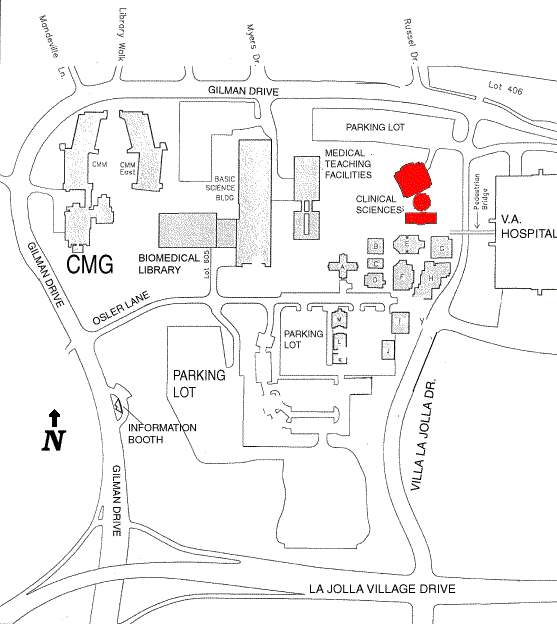
The San Diego CFAR Translational Virology Core is located on the UC San Diego School of Medicine campus in the Stein Clinical Research Building, Third Floor, Room 324.
The TV Core is housed in separate clinical and basic science laboratories, each outfitted with all the necessary equipment. The clinical laboratory is in Hillcrest near the AntiViral Research Center (AVRC) where clinical trials are conducted. Just 12 miles north, the basic science laboratory is located in the Stein Clinical Research Building (SCRB) on the UCSD main campus in La Jolla. The AVRC site is responsible for point-of-care assays (e.g., rapid HIV antibody testing, urine dipsticks) and clinically validated assays (e.g., viral loads), performed through CLIA-certified laboratories when needed for clinical endpoints. The SCRB site supports the basic science assays (e.g., viral quantification by ddPCR and proviral sequencing). A courier makes 1-2 trips between the AVRC and the SCRB labs daily, Monday-Friday.
Contact information
UC San Diego CFAR Advanced Techology Core
9500 Gilman Drive, Mail Code 0679
La Jolla, California 92093-0679
TEL: 858-642-1620
FAX: 858-552-7445
E-mail: Core Administrator
Additionally, some services are performed at the:
UCSD Antiviral Research Center (AVRC)
220 Dickinson St, Suite A
San Diego, CA 92103
Services
Please see below for pricing on services provided by the Translational Virology Core.
The service rates provided by the UCSD Translational Virology Core are structured into the following pricing categories:
- UCSD Base Rate:
Applies to UC campuses, the VA San Diego Healthcare System, and the Veterans Medical Research Foundation (VMRF). - Affiliated Rate:
Applies to non-profit organizations, universities outside the UC system, and other academic or low-income organizations. - Industry Rate:
Applies to for-profit external entities.
This tiered pricing structure ensures appropriate cost recovery based on the type of organization receiving services.
MINIMUM SAMPLE REQUIREMENTS
Unless otherwise specified, most molecular and extraction-based services require a minimum of 12 samples per batch to ensure efficient processing, quality control, and cost-effective use of Core resources.
Certain services (e.g., CD4 isolation, sequencing, or specialized assays) may have different minimums, which are noted in the service description.
CUSTOMIZED & PROJECT-BASED PRICING
Many services are customized based on study design, sample type, assay complexity, batching, and investigator-supplied reagents. As a result, final pricing is often individualized, particularly for pilot projects, large studies, or multi-assay workflows.
In addition, ex vivo and in vitro functional studies, cloning, assay development, specialized molecular manipulations, and other complex or non-standard services are quoted on a case-by-case basis, depending on scope, reagents, technical time, and equipment requirements.
Investigators are strongly encouraged to contact the Core Director prior to budgeting or submission to discuss feasibility, optimize workflows, and obtain customized quotes or bundled pricing when appropriate.
If you require a service that is not listed, please contact the Core Director — we are happy to provide customized assistance.
SERVICE |
UCSD Rate | Affiliate/ nonprofit |
Industry/ for profit |
MOLECULAR WORK |
|||
| CD4 Isolation (per sample; minimum 6 samples) | $ 160 | $ 332 | $ 664 |
| cDNA generation (per sample) | $ 36 | $ 75 | $ 150 |
| Co-extraction (RNA & DNA) from blood cells | $ 77 | $ 159 | $ 319 |
| DNA extraction from blood cells | $ 47 | $ 98 | $ 196 |
| DNA extraction from large-volume samples (MIDI kit) | $ 68 | $ 142 | $ 283 |
| DNA extraction from plasma/other body fluids | $ 47 | $ 97 | $ 194 |
| DNA extraction from swabs | $ 47 | $ 97 | $ 195 |
| DNA extraction from tissue (per aliquot) | $ 57 | $ 118 | $ 236 |
| DNA precipitation | $ 35 | $ 73 | $ 147 |
| RNA extraction from blood cells | $ 48 | $ 99 | $ 199 |
| RNA extraction from plasma/fluids (with concentration) | $ 55 | $ 114 | $ 228 |
| RNA extraction from plasma/fluids (without concentration) | $ 48 | $ 100 | $ 199 |
| RNA extraction from swabs | $ 48 | $ 100 | $ 199 |
| RNA extraction from tissue | $ 55 | $ 114 | $ 228 |
| RNA extraction for single-copy assay (5 mL input) | $ 172 | $ 357 | $ 713 |
| RNA extraction with manipulations (e.g., sucrose gradient) | $ 55 | $ 113 | $ 227 |
| . | |||
SEQUENCING |
|||
| Single-Genome Sequencing (baseline, per sample)# | $ 967 | $ 3,538 | $ 7,076 |
# This price reflects our standard HIV-1 env single-genome amplification workflow. Whole-genome HIV sequencing or sequencing of other viral genomes (e.g., CMV, HBV, etc.) is priced separately based on genome length, primer design, and labor intensity. |
|||
VIRAL and HOST GENE QUANTIFICATIONS |
|||
| TaqMan qPCR (standard targets, per sample) | $ 32 | $ 66 | $ 131 |
| ddPCR HIV DNA / CMV DNA / EBV DNA (multiplex + housekeeping) | $ 94 | $ 195 | $ 390 |
| ddPCR HIV RNA (spliced & unspliced, multiplex) | $ 93 | $ 194 | $ 387 |
| ddPCR DNA (non-standard targets, per reaction) | $ 21 | $ 51 | $ 102 |
| ddPCR RNA (non-standard targets, per reaction) | $ 26 | $ 62 | $ 124 |
| ddPCR instrument usage (per run) | $ 114 | $ 236 | $ 471 |
| cDNA generation (per sample) | $ 36 | $ 75 | $ 150 |
| . | |||
ELISA |
|||
| Standard ELISA assay (per sample) | $ 28 | $ 59 | $ 117 |
| . | |||
BLOOD PROCESSING |
|||
| Standard blood processing – 30 mL | $ 537 | $ 778 | $1,556 |
| Standard blood processing – 40 mL | $ 593 | $ 860 | $1,719 |
| Standard blood processing – 60 mL | $ 622 | $ 902 | $1,805 |
| Standard blood processing – 150 mL | $ 650 | $ 942 | $1,885 |
| . | |||
BIOREPOSITORY |
|||
| LN2 storage (per box, per month) | $ 16 | $ 23 | $ 46 |
| -80°C storage (per box, per month) | $ 12 | $ 17 | $ 34 |
| -20°C storage (per box, per month) | $ 12 | $ 17 | $ 35 |
| . | |||
TECHNICAL LABOR and ANALYSIS |
|||
| Technical labor (standard, per hour) | $ 79 | $ 115 | $ 230 |
| Specialized labor (per hour) | $ 135 | $ 195 | $ 390 |
| Bioinformatics / data processing & visualization (per hour) | $ 210 | $ 304 | $ 609 |
| . | |||
BASIC EQUIPMENT USAGE |
|||
| Basic equipment usage (per person, per week) | $ 60 | $ 145 | $ 290 |
| . | |||
SPECIALIZED EQUIPMENT USAGE |
|||
| Illumina MiSeq (per run) | $ 159 | $ 307 | $ 613 |
| Sony Analysis (per hour, exclude tech time) | $ 80 | $ 116 | $ 233 |
| Wolf Sorter (per hour, exclude tech time) | $ 45 | $ 87 | $ 174 |
| Cytek Sorter (per hour, exclude tech time) | $ 90 | $ 174 | $ 349 |
| Luminex instrument (per run) | $ 75 | $ 144 | $ 289 |
| 10X Chromium Controller (per run) | $ 60 | $ 116 | $ 231 |
We were humbled to have Paul Edmonds visit the TV Core (3/14/24), known as the “City of Hope Patient.”
Download the Last Gift Logo in high resolution.
The Last Gift tissue donation research study aims to understand the behavior of HIV in the human body – giving scientists the rare opportunity to learn where the virus hides in an individual and inspire medical advancements for generations to come.
Learn more about the Last Gift HIV rapid autopsy research study
If work performed for you at the San Diego CFAR Translational Virology Core results in publication, please acknowledge us with the following statement and please e-mail a PDF of your publication to the Core Administrator
This work was performed with the support of the Translational Virology Core at the San Diego Center for AIDS Research (P30 AI036214).
FOR INTERNAL USE:
Faculty and Staff of the Translational Virology Core please use the following acknowledgement statement for our publications:
Everyone should always acknowledge:
- AI036214 (CFAR P30)
- UM1TR005449 (ACTRI)
- The James B. Pendleton Charitable Trust
For trainees, please acknowledge:
- AI007384 (HOPE T32 Training)
If you are involved in Last Gift-related work, please consider acknowledging the following grants:
- AI164559 (HOPE Delaney Collaboratory)
- AI164570 (BEAT Delaney Collaboratory)
- AI169609 (P01 Smith HOME)
- AI181705 (R56 Connick/Gianella)
- AI186609 (R01 Jiang Histone)
- CA023100 (Lippman Cancer)
- DA055491 (R01 Chaillon Myeloid Cells)
- DA059551 (R01 Ott Opioid)
- DA062278 (R01 Inflammasone Chaillon)
- DK131497 (R01 Blasi Renal)
- DK131532 (R01 Smith Gut)
- HL183482 (P01 James Voss)
- MH062512 (Moore HNRC P30)
- MH136852 (R01 Jiang Latency)
- NS137852 (R01 LaMere Brain Epigenetics)
- U24MH100928 (California NeuroAIDS Tissue Network)
If your work is related to CMV, please acknowledge:
- AI155680 (R01 Schacklett CMV)
If your work involves the ACTG, please acknowledge:
- AI068636 (ACTG UM1)
- AI106701 (ACTG Lab Center)
If your research includes not only men, please acknowledge:
- AI181655 (R01 Gianella Menopause)
- AI189309 (R01 Gianella Estrogen Exposure)
Other grants:
- AMED under Grant Number JP243fa627003 (Smith Japan Grant)
- AI170254 Sub PH000875A (R01 Rui HIV Rebound modeling)
- AI197937 (R01 Beliakova-Bethell Topotecan)
 | Viral and Immune Risk Factors of HIV Rebound after Interruption of Antiretroviral Therapy The Journal of Infectious Diseases 2024 |
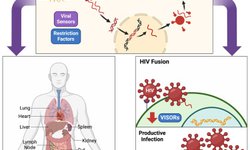 | Anatomical, subset, and HIV-dependent expression of viral sensors and restriction factors Cell Reports2025 |
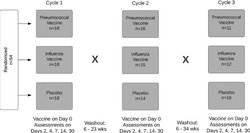 | Impact of influenza and pneumococcal vaccines on HIV persistence and immune dynamics during suppressive antiretroviral therapy. AIDS 2024 |
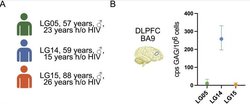 | Gene expression and chromatin conformation of microglia in virally suppressed people with HIV. Life Science Alliance 2024 |
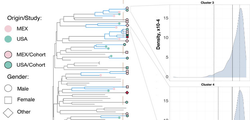 | HIV-1 transmission dynamics among people who inject drugs on the US/Mexico border during the COVID-19 pandemic: a prosepective cohort study. The Lancet Regional Health – Americas 2024 |
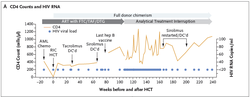 | HIV-1 Remission after Allogeneic Hematopoietic-Cell Transplantation New England Journal of Medicine. 2024 |
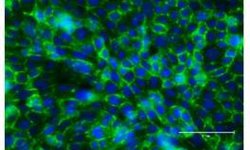 | Brain Microglia Serve as a Persistent HIV Reservoir Despite Durable Antiretroviral Therapy. Journal of Clinical Investigation. 2023. |
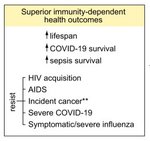 | Immune Resilience Despite Inflammatory Stress Promotes Longevity and Favorable Health Outcomes Including Resistance to Infection. Nature Communications. 2023. |
 | Vulnerability in Biomedical Research: A Historical Reflection and Practical Implications for HIV Cure-Related Research. AIDS Research and Human Retroviruses. 2023 |
 | Sex Differences in Cytokine Profiles During Suppressive Antiretroviral Therapy. AIDS. 2022. |
 | A Community Call to Action to Prioritize Inclusion and Enrollment of Women in HIV Cure-related Research. Journal of Acquired Immune Deficiency Syndromes. 2022. |
 | HIV persists throughout deep tissues with repopulation from multiple anatomical sources. HIV reservoirs persist in all deep tissue. The Journal of Clinical Investigation. 2020. |
 | Sex Differences in Human Immunodeficiency Virus Persistence and Reservoir Size During Aging. Study Provides new insights regarding sex differences in HIV persistence. Clinical Infectious Diseases. 2021. |